
Personal Finance Fundamentals: Start With a Clear Money Snapshot
A simple money snapshot can help individuals and families understand where their money comes from, where it goes, and what they want to work toward. Use this practical first step as an educational tool—not personalized financial advice.
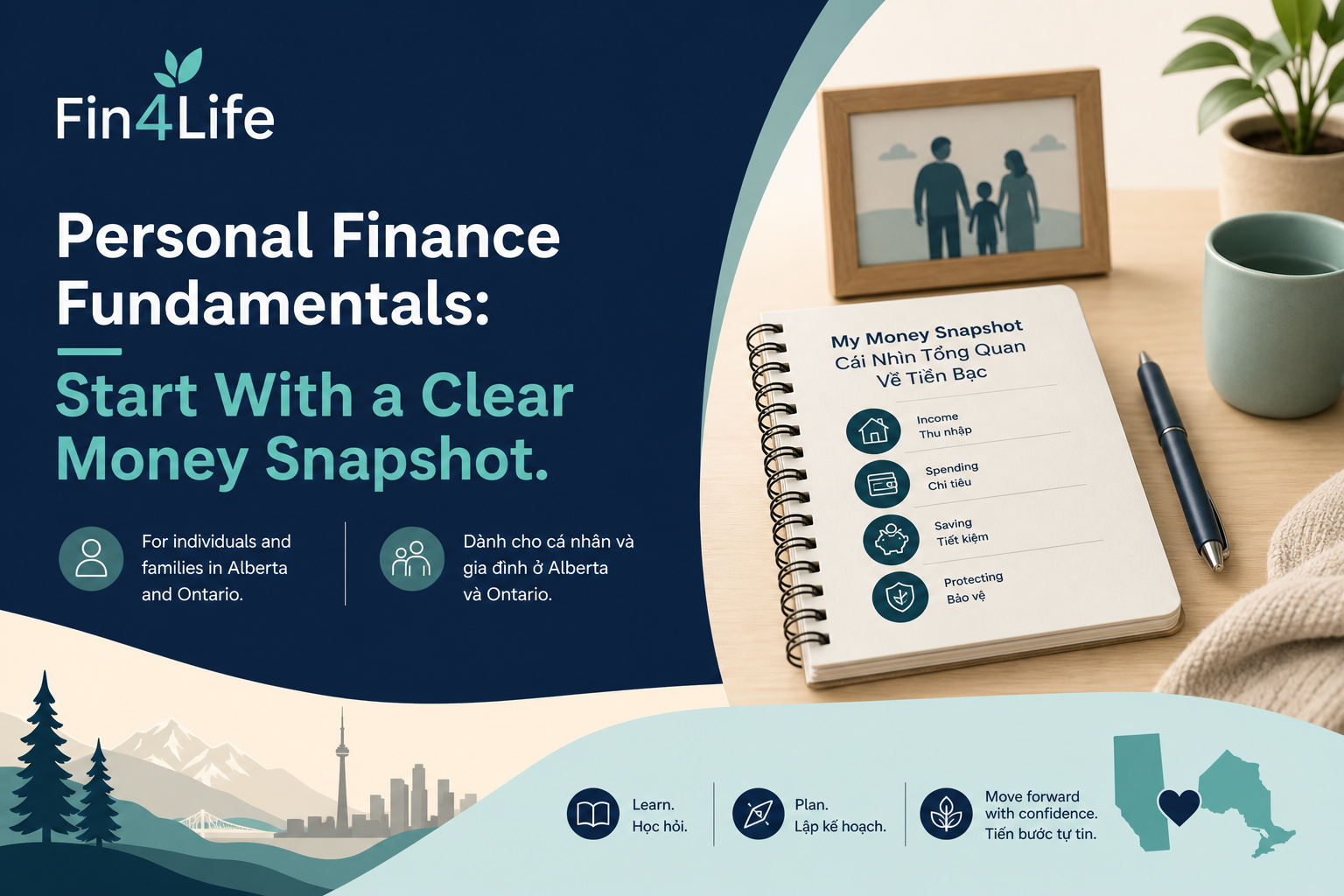
Good financial decisions usually begin with a clear picture of the present. Before choosing a product, changing a payment habit, or setting a new goal, take a short money snapshot.
Set aside about 20 minutes and write down five areas:
1. Money coming in: List the income sources that your household normally relies on. Use amounts and timing that reflect your regular situation.
2. Regular commitments: Note expenses that are predictable, such as housing, utilities, transportation, insurance, and scheduled payments.
3. Flexible spending: Record categories that can change from week to week, including food, personal purchases, entertainment, and other day-to-day costs.
4. Borrowing and savings: Make a simple list of outstanding debts, regular payments, and money already set aside. You do not need to share account numbers or other private information.
5. Priorities: Write down one short-term priority and one longer-term priority. These might relate to household stability, a planned purchase, education, or another goal that matters to your family.
The purpose is not to judge every purchase or create a perfect forecast. It is to make the next conversation more useful. Once the snapshot is complete, look for one question: Is there a category that needs more attention, more information, or a clearer decision?
Financial literacy is especially valuable when circumstances and financial services change. A basic understanding of your own money picture can make it easier to ask informed questions, compare information, and recognize when you need additional guidance. If you have a concern about a banking service, keep your records and learn about the available complaint-handling process.
This exercise is for general education only. Every household has different circumstances, and a personal decision may require advice from an appropriately qualified professional. Continue learning at your own pace, and use your snapshot as a starting point for thoughtful next steps.
General education, not individual financial, tax, legal or insurance advice. Examples are illustrative.