
When a Message Feels Urgent: Simple Habits for Fraud Prevention and Financial Safety
Fraud prevention starts with slowing down when a message, call or request creates pressure. This educational guide uses an everyday example to explore how careful verification, privacy awareness and open family conversations can support financial safety. It also explains why strong systems against financial crime matter to Canadians. For education only—not personalized financial, tax or legal advice.
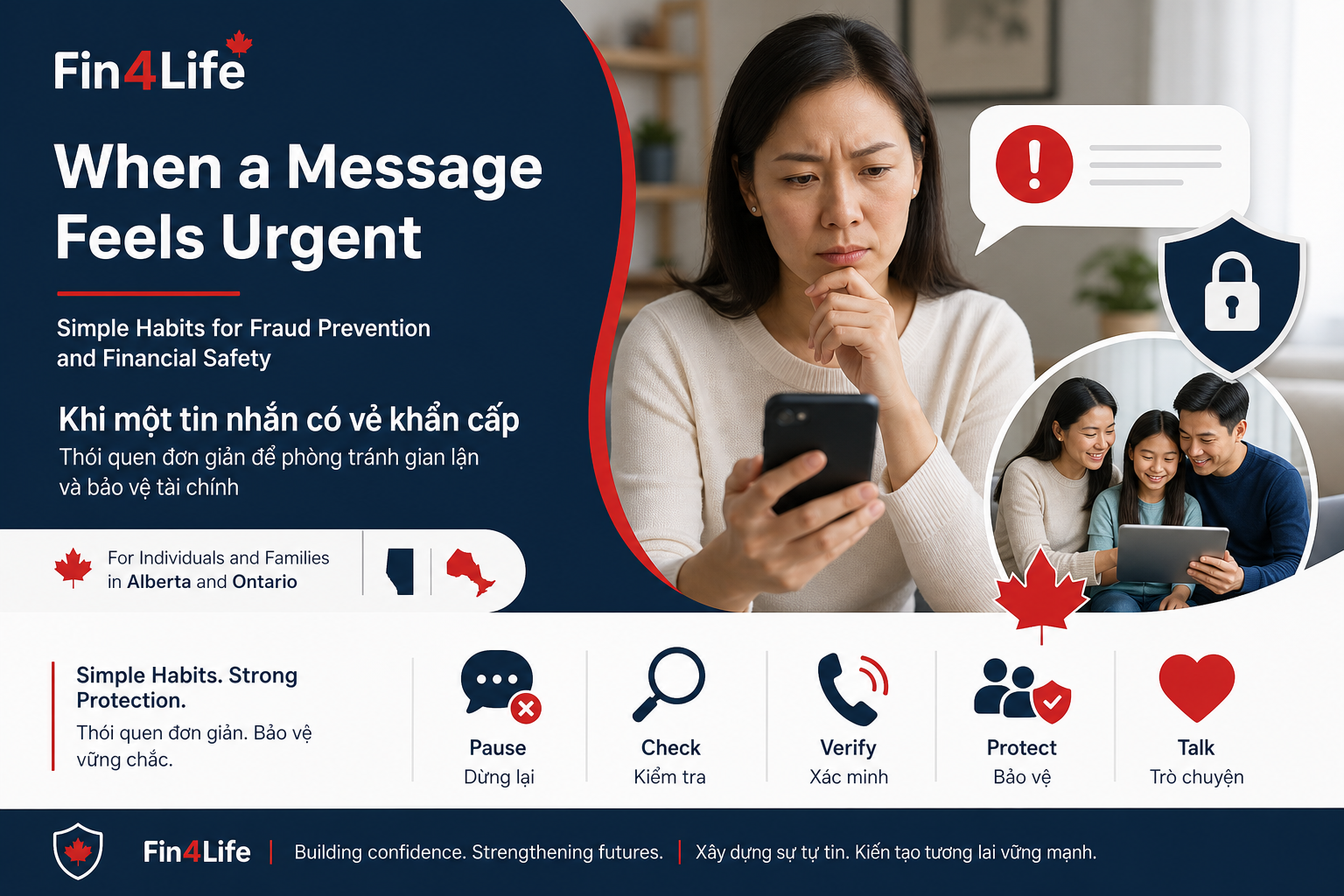
Imagine receiving a message that says a payment must be made immediately to prevent a problem. It may look familiar, use urgent language or ask for information that feels private. Before reacting, pause. Pressure is a reason to verify—not a reason to skip verification.
A practical family discussion can begin with three questions:
1. Who is contacting us, and how can we confirm that independently?
2. What information or payment is being requested?
3. What would happen if we took time to check before responding?
Verification should use a trusted channel that you find independently, rather than relying only on contact details in the unexpected message. Avoid sharing private financial information until the request has been confirmed. If the situation remains unclear, discuss it with someone you trust and consider seeking guidance through an appropriate official or professional channel.
Families can make these habits easier by agreeing in advance that no one will be criticised for pausing, asking questions or checking a request. A shared phrase—such as “Let’s verify first”—can help children, older relatives and other household members recognise that urgency deserves careful attention. The goal is not to create fear. It is to make thoughtful decisions easier when emotions are high.
Fraud prevention is also part of a wider financial safety picture. Canada’s strong, sustained framework for combating financial crime helps protect Canadians against fraud, organised crime, sanctions evasion and terrorist financing, while supporting confidence in the integrity of the country’s financial system and the agencies involved. Personal awareness and responsible systems work alongside each other.
For an engagement prompt, ask your household: “What would make us stop and verify an unexpected request?” Write down your answer and revisit it periodically. Continue learning about financial safety through reliable educational resources. This content is for general education only and is not personalised financial, tax or legal advice.
General education, not individual financial, tax, legal or insurance advice. Examples are illustrative.